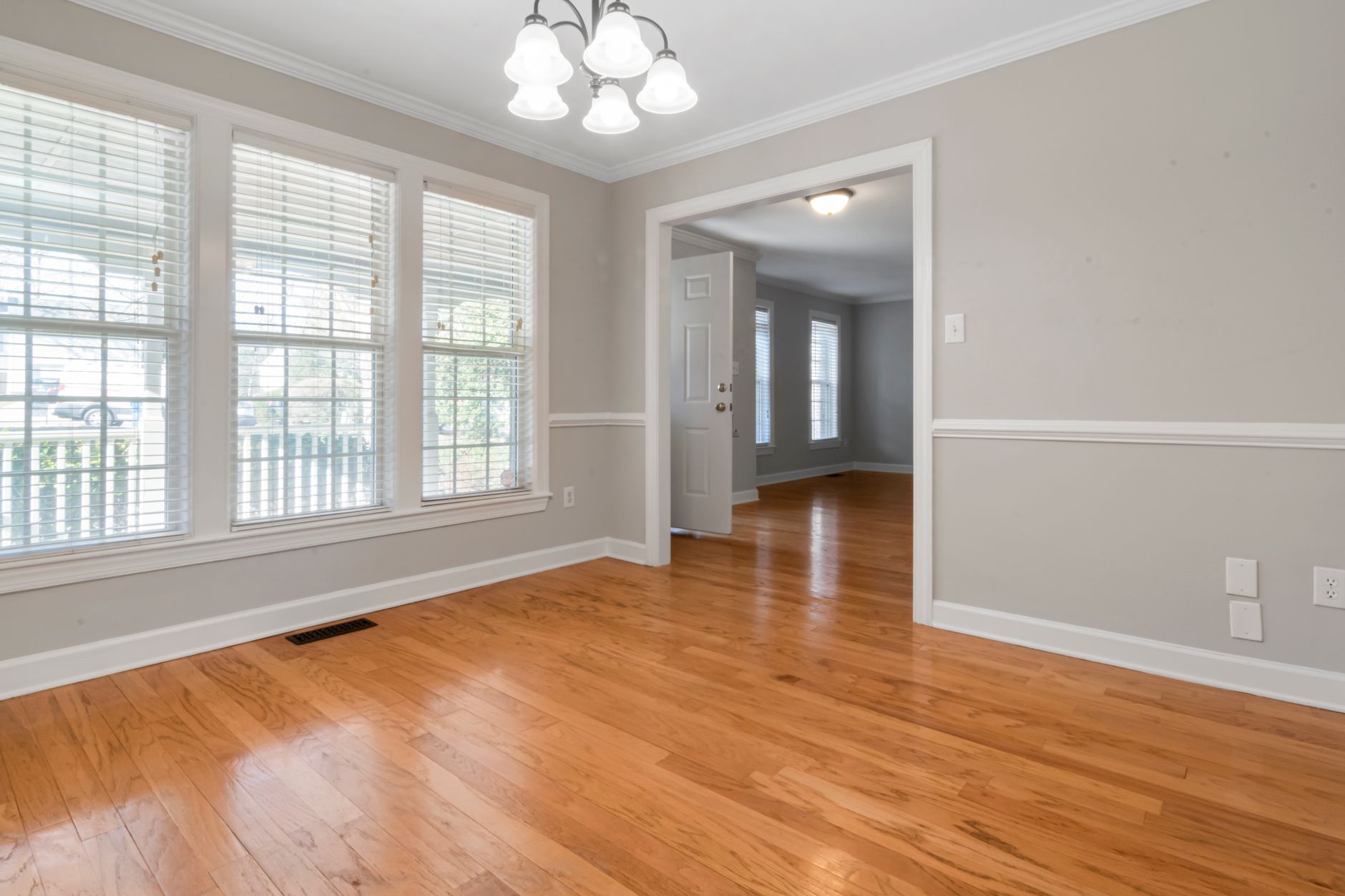
Choosing a floor in Oregon.
One state, two climates. The Cascade crest decides which floors make sense here and how a wood board behaves once it is down. Eight materials, where each one belongs, and an estimator for when you get to the numbers.
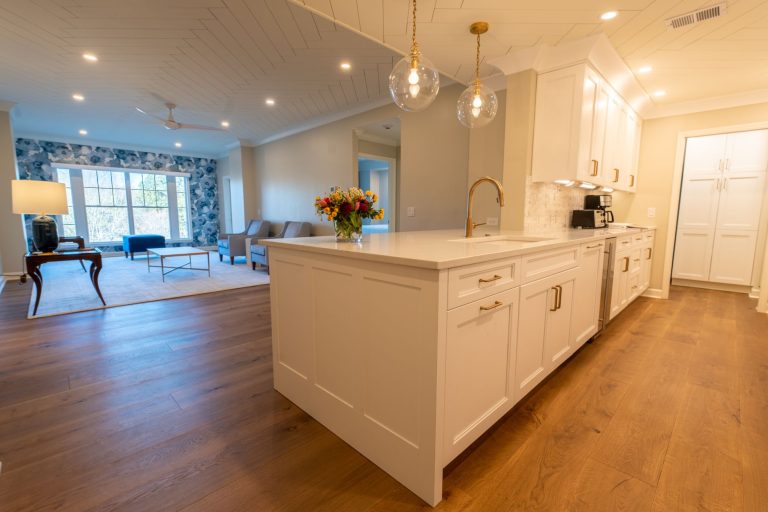
Kitchen
Where a slow leak finds the subfloor first.
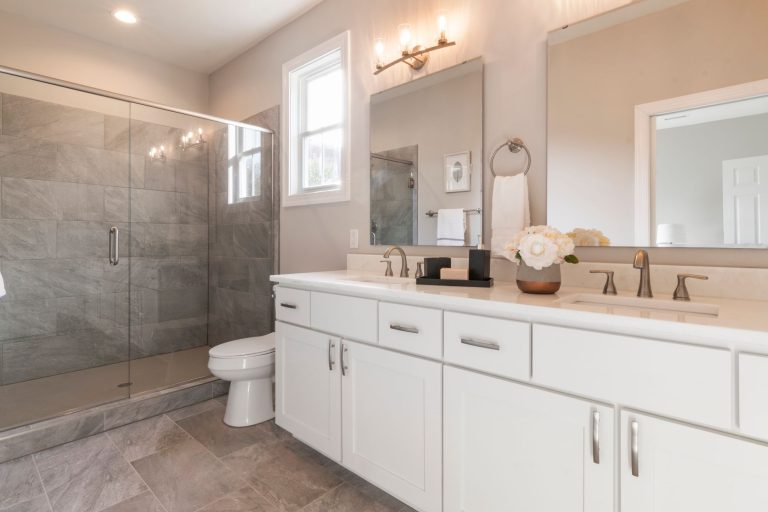
Bathroom
The other place soft decking turns up.
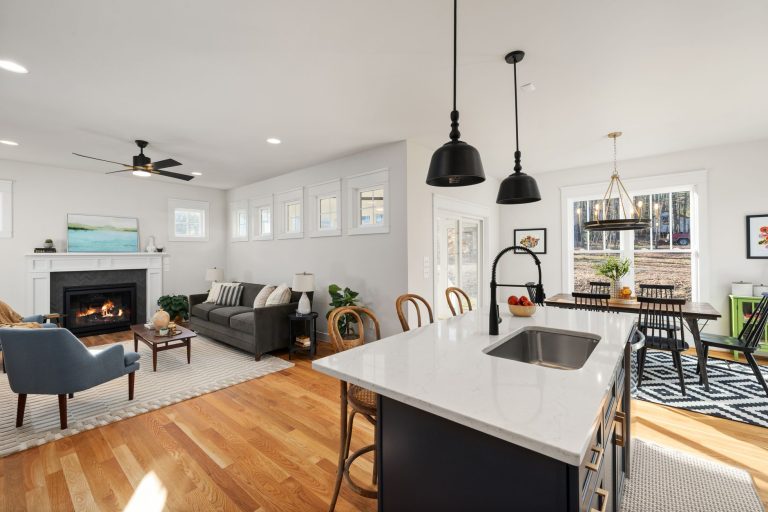
Living room
The floor everyone sees first.
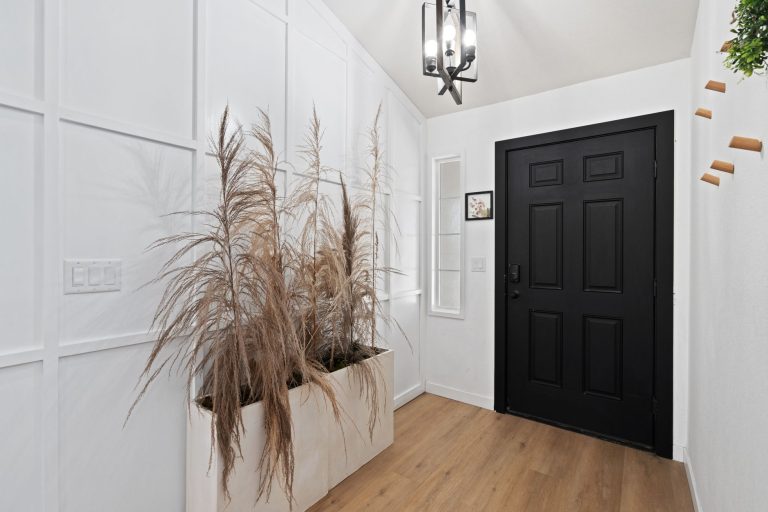
Entry & foyer
Grit, wet boots and the first four feet of every floor.
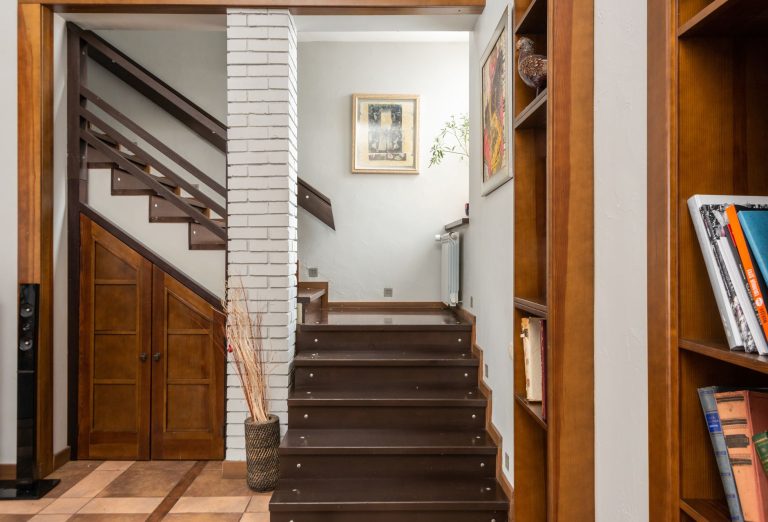
Stairs
The most-walked surface in the house.
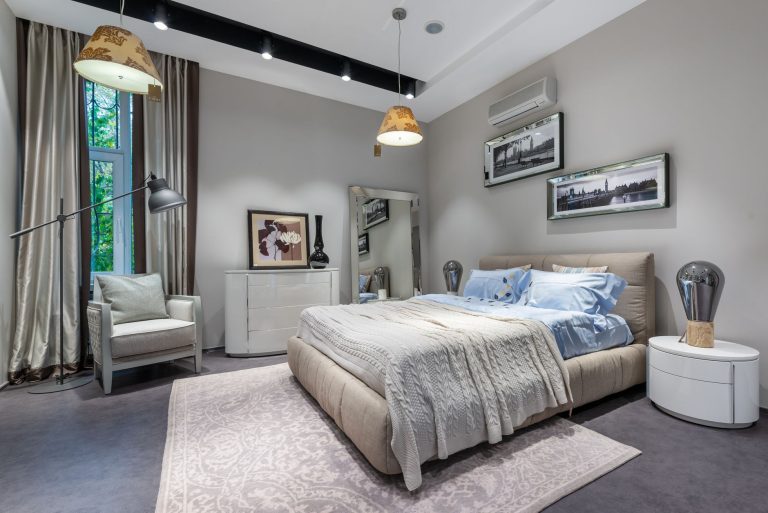
Bedrooms
Quiet, warm, and the cheapest room to get right.
Eight kinds of floor
What each one is good at, what it costs installed here, and the rooms where it is the wrong answer.
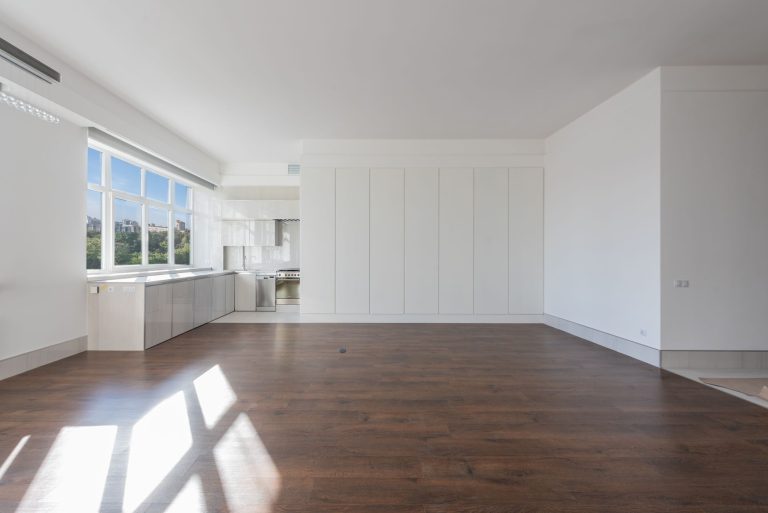
Hardwood
Solid and engineered. Still the best resale return on this list.
Luxury Vinyl Plank
Floats rather than bonds, so it rides over ground that still moves.
Carpet
Bedrooms and stairs — and the first thing to go after water.
Refinishing
Sand, stain and seal the boards already under the carpet.
Tile & Porcelain
Hard-wearing, and the one that cracks if the ground moves under it.
Laminate
The budget end done properly — and where it is a false economy.
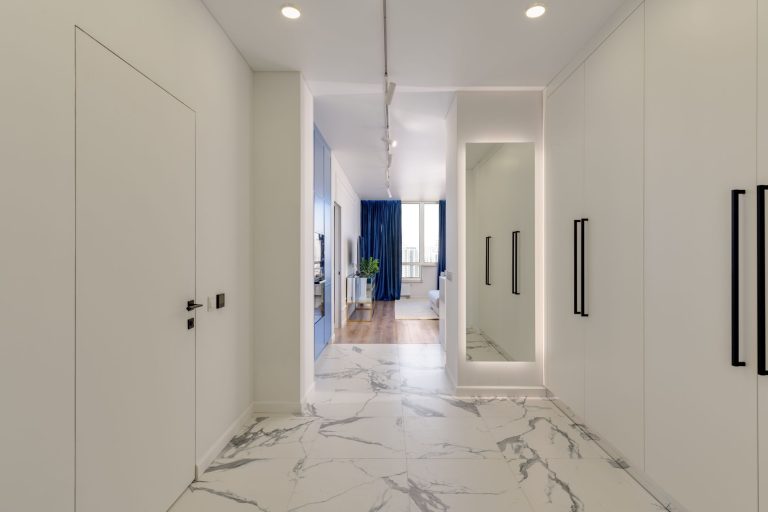
Natural Stone
Entries and great rooms, where the floor does the talking.
Stairs & Landings
Treads, risers and railings, raised-floor houses included.
Installed ranges across Oregon
Materials and labor together. The Portland metro sets the top of each band, Central Oregon sits just under it, and the Willamette Valley, Southern Oregon and Eastern Oregon below that. Only the labor half moves — material is a national commodity.
| Work | Installed range | |
|---|---|---|
| Hardwood, installed | $7 – $24 | per sq ft |
| Luxury vinyl plank | $3 – $13 | per sq ft |
| Carpet, installed | $3 – $9 | per sq ft |
| Laminate | $3 – $10 | per sq ft |
| Refinish existing boards | $3 – $9 | per sq ft |
| Tile, installed | $10 – $18 | per sq ft |
| Removing the old floor | $1 – $4 | per sq ft |
An estimate, not a quote. These are planning ranges for Oregon, not a quote. What you actually pay depends on your rooms, your subfloor and the material you choose.
Work out your own number
Your room, your material, what is already down. It runs in the page, it does not ask for your email, and nobody calls you afterwards.
- Runs entirely in your browser — nothing is sent anywhere unless you ask us to email it.
- Splits the number into materials, labor and the extras that actually move a flooring bill.
- Regional labor differences are applied to labor only, because that is the part that varies.
- No email required, no phone number, and nobody calls you.
Four things that are specific to Oregon
Oregon is two flooring markets with a mountain range between them
Portland takes 43.7 inches of rain a year across 163 days with measurable precipitation. Bend, 130 miles east across the Cascades at 3,623 feet, takes 10.6 inches across 63. Medford, behind the Siskiyous in the Rogue Valley, sits in the middle at 18.4 inches over 103 days. Those are NOAA thirty-year normals, and they are the reason the same board can be the right choice at one end of this state and the wrong one at the other. Every page here says which side it is talking about.
The moisture target moves, and that is the practical difference
Wood takes on and gives up water vapor until it is in equilibrium with the air around it, and it never stops doing that. The National Wood Flooring Association specifies an interior held between 30% and 50% relative humidity at 60-80°F, with the flooring itself at 6-9% moisture content; at 70°F and 40% relative humidity, wood sits at 7.7%. Western Oregon rooms sit near the top of that band without anyone doing anything. Central Oregon rooms run 15-20% relative humidity in January, below the bottom of it, so installers there aim near 6%. Acclimation is a number, not a waiting period.
East of the crest it decides the format, not just the care
A cross-laid engineered core moves far less across its width than a solid board does, and a narrower board moves less in absolute terms than a wide one — a 7-inch plank has more than twice the width to shrink across as a 3-inch strip. That is why so much of what goes into Bend and Redmond is engineered, and it is a sound technical reason rather than a sales preference. If the plan is solid wood on the dry side, the plan includes holding the house above 30% relative humidity through the winter.
West of the crest, find out what is already down there
Portland is 26.8% pre-1940 — the oldest housing in the state by a wide margin — and in that era an Oregon floor was usually vertical-grain Douglas fir, very often still in place under a later carpet. Modern fir is soft, at about 660 on the Janka scale against red oak's 1,290, but the fir in a 1912 house came from tight-ringed old-growth timber and is considerably denser than anything sold under the same name today. Refinishing costs roughly a third of replacing. Ten minutes with a pry bar in a closet is the cheapest research you will do.
of rain a year in Portland, across 163 wet days
in Bend, across 63 — same state, 130 miles east of the crest
the moisture content wood flooring is specified at, and the target moves
the flatness most tile needs over 10 ft, and what to measure before buying
Across Oregon
Ten Oregon cities, each with its own housing stock and its own answer. Every figure on these pages is that city's own Census number, not a state average.
Questions people actually ask
Does it really matter which side of the Cascades I am on?
For a wood floor, yes, and it is the biggest single variable in this state. Portland gets 43.7 inches of rain a year and Bend gets 10.6. A western Oregon interior sits inside the 30-50% humidity range wood flooring is specified for most of the year without help; a Central Oregon interior routinely runs 15-20% in winter. Same board, same warranty, two different outcomes. For tile, stone, vinyl plank and laminate it makes almost no difference at all, because none of them move with humidity.
What moisture content should the installer be targeting?
Ask, and expect a number. The specified range is 6-9% moisture content, and where in that range depends on the room the floor will live in. East of the Cascades that is near 6%; in the Willamette Valley it is nearer the top. A board delivered at 9% and laid in Bend in November will keep drying after the crew leaves and the gaps will open in January. An installer with a meter and an answer is telling you something useful.
Is there really an old wood floor under my carpet?
In a west-side house built before about 1950, quite possibly, and in an Oregon house of that era it is usually 3-1/4 inch vertical-grain Douglas fir rather than oak. More than a quarter of Portland's housing predates 1940. Lift a corner in a closet with pliers, fold the carpet back off the tack strip and look. It costs ten minutes and refinishing runs about a third of the cost of a new floor.
Can I put solid hardwood in Bend?
Yes, and plenty of houses have it. It needs a narrower board, a genuine acclimation target near 6% moisture content, and whole-house humidification run through the winter. Treated as part of the installation it works; treated as optional it gaps. Engineered is the lower-maintenance answer on that side of the state and it is not a compromise if the wear layer is thick enough to refinish.
How flat does my floor actually need to be?
Most plank manufacturers specify around 3/16 in over 10 ft, and tile — particularly large-format — wants closer to 1/8 in over 10 ft. Lay a ten-foot straightedge on the floor and measure the biggest gap under it. That one measurement decides whether you are buying a floor or a floor plus a leveling job, and knowing it before you get quotes is worth more than any other ten minutes you will spend.
Do flooring installers in Oregon need a license?
Yes. Anyone paid to do construction work in Oregon must hold an active license with the Construction Contractors Board, and unlike some states there is no specialty exemption for floor covering. The license requires a surety bond and general liability insurance, and the number is public and searchable on the CCB's own site. Check it — it takes a minute. But treat it as a floor rather than a recommendation: it tells you someone is bonded, not that they have ever sanded a fir floor.