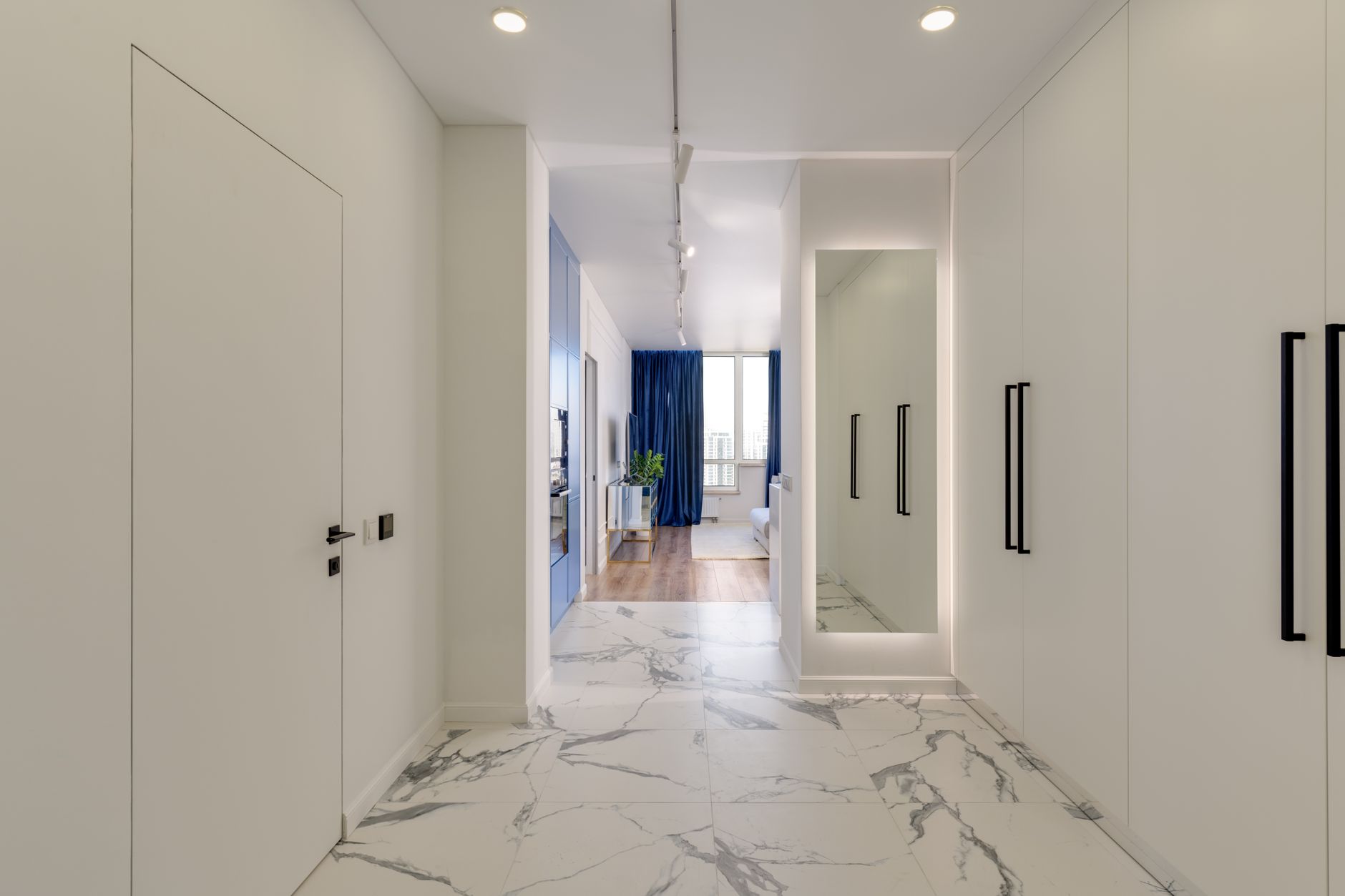
Natural Stone Flooring in Oregon: Costs, Sealing and Cold Floors
Stone is the most expensive floor on this site and the one with the longest life, and almost everything that goes wrong with it is a sealing or a substrate decision made on day one.
What it costs
Installed natural stone runs about $13 to $42 per square foot in Oregon. A straightforward slate in a small entry sits near the bottom; honed marble, a pattern set, or a floor that needed the structure stiffened first sits near the top. Stone is heavy, hard to cut and unforgiving of a bad substrate, and all three show up in the labor line.
An estimate, not a quote. These are planning ranges for Oregon, not a quote. What you actually pay depends on your rooms, your subfloor and the material you choose.
Which stone, and what each one asks of you
Slate is the most practical here: dense, naturally textured so it is not slippery wet, and forgiving of the grit that comes through an Oregon door. Travertine is warmer-looking and porous, and filled travertine will need the fill maintained. Marble is the softest and the most easily etched — anything acidic marks it, and in a kitchen that is a matter of when rather than if. Granite and quartzite are the hardest and the most expensive to work.
Sealing is maintenance, not a one-off
An impregnating sealer soaks into the stone and slows absorption; it does not make stone waterproof and it does not last forever. Most floors want resealing every one to three years depending on traffic, and the test is simple: drop water on it, and if it darkens within a few minutes it needs doing. A quote that includes “sealed” is describing the first coat, not the life of the floor.
The substrate rules are stricter than for tile
Natural stone usually wants L/720 joist deflection — twice as stiff as ceramic tile — because stone is more brittle across a slab than a fired tile is. In an older west-side Oregon house that frequently means sistering joists or adding subfloor before anything is set. Ignore it and the floor telegraphs every joist line within a year.
It is a cold floor, and that lands differently by region
Stone takes the temperature of what is under it and gives it back slowly. In a Willamette Valley house with mild winters that reads as pleasantly cool. In Bend it reads as cold from November to March, and electric mat underneath is close to standard practice. As with tile, that decision cannot be revisited without lifting the floor.
Common questions
Is stone slippery when wet?
Polished stone is, which is why a polished marble entry is a poor idea in a climate with 163 wet days. Honed, tumbled or naturally cleft finishes are much better, and slate is the safest of the common choices.
Can stone go over a heated floor?
Yes, and it is one of the best pairings there is — stone holds heat well and gives it back evenly. The system has to be designed for the mass, and the installer needs to know before the substrate is built.
Will it crack?
Not if the floor under it is stiff enough and an uncoupling membrane is used. Almost every cracked stone floor is a deflection problem that was visible before the first piece was laid.