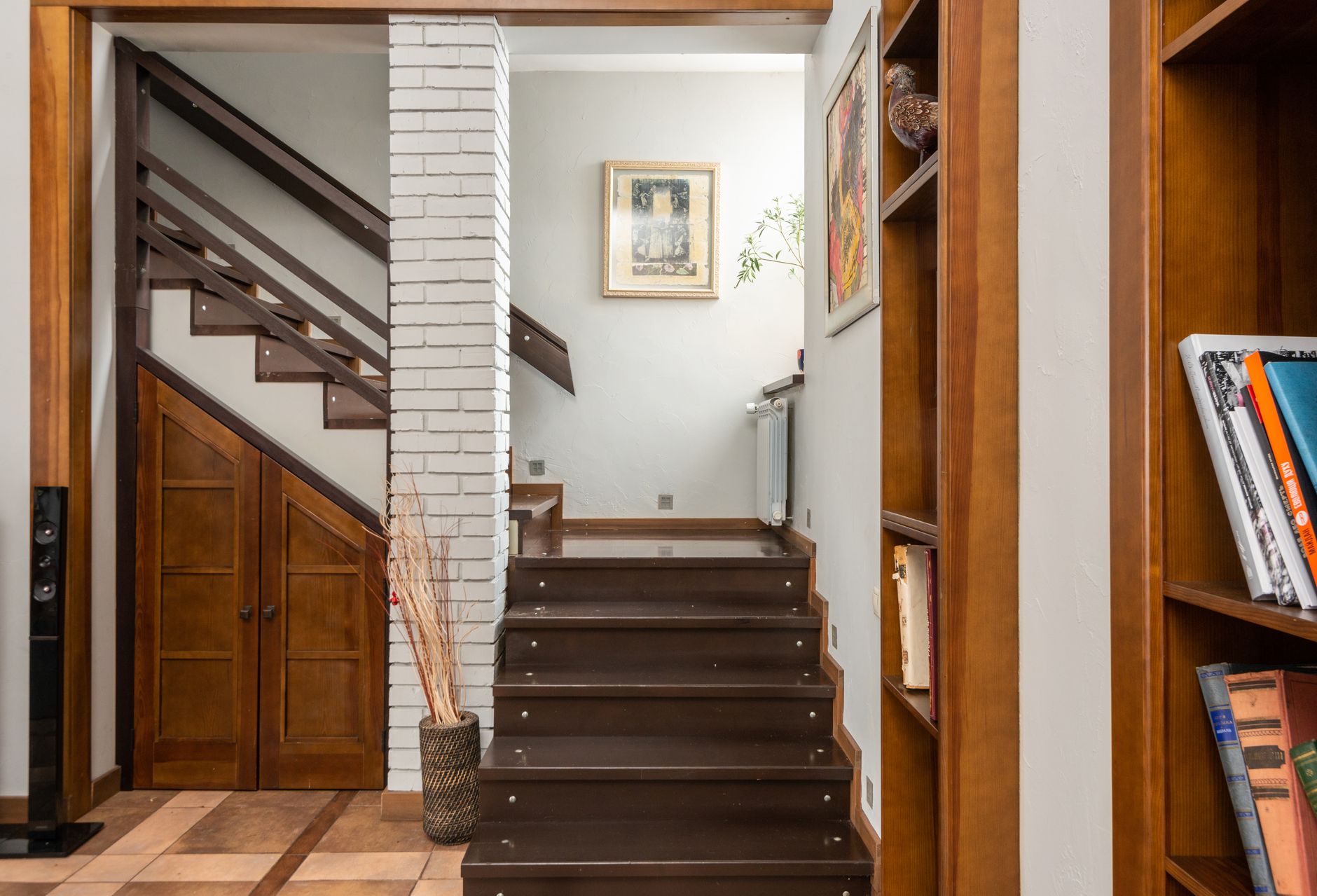
Stairs and Landings in Oregon: Costs Per Step and What Is Under the Carpet
Stairs are priced per step because they are almost entirely labor, and on a west-side Oregon staircase what is under the carpet is often worth more than what would replace it.
What it costs
Stairs run about $65 to $150 per step in Oregon, and that is the right unit — a staircase is not a small floor, it is fourteen small carpentry jobs. Carpet on an existing straight flight sits near the bottom. Wood treads with returned ends, new risers, and a landing to match sits near the top. Winders and curved flights cost more again because every piece is cut individually.
An estimate, not a quote. These are planning ranges for Oregon, not a quote. What you actually pay depends on your rooms, your subfloor and the material you choose.
Why it is a separate line, always
A quote that folds the staircase into the square footage of the floors is either guessing or hiding it. Ask for stairs priced per step, and ask what a landing counts as. The most common cost surprise on an Oregon flooring job is a staircase discovered halfway through, and it is entirely avoidable at the quoting stage.
What is under the carpet on an old Oregon staircase
In a house built here before about 1950 — and 26.8% of Portland’s housing predates 1940 — the treads under the carpet are frequently solid vertical-grain Douglas fir, sometimes with oak treads and fir risers. Original fir treads are usually thick enough to refinish, and the fir in an old Oregon house came from tight-ringed timber that is considerably harder than the modern product of the same name.
Two cautions before getting excited. First, tack strip and staples leave a line of holes along each tread edge, and a runner rather than a bare tread is often the honest answer. Second, a stripped, refinished staircase is a slippery staircase; a runner is safer as well as quieter.
Code is a floor, not a preference
Riser heights within 3/8 in of each other across a flight, a nosing that projects consistently, and a handrail that runs the length of it. Changing tread thickness — adding wood over carpeted treads, for instance — changes the top and bottom riser heights, and that is the detail that turns a simple job into a rebuild. It is worth raising before the quote, not after.
The Oregon staircase that is not a staircase
The daylight basement is common across the west side of the state, and it produces a flight that goes from a heated living space to a room over a slab. Whatever goes on those treads is fine; what matters is what happens at the bottom, where the assembly changes and a moisture-tested slab and a transition detail both become part of the job.
Common questions
Can I carpet just the stairs and have hard floors elsewhere?
Yes, and it is a common and sensible combination here — quiet and grippy where people fall, hard and washable where the wet comes in.
Runner or full-width carpet?
A runner shows the tread edges and is easier to replace; full width is warmer and hides tack holes. On a refinished fir staircase, a runner is usually the better outcome.
How long does a staircase take?
A carpeted flight is a day. Wood treads and risers on an existing staircase is two to four days including finishing, and the staircase is out of use for part of it — which matters more in a two-story house than the cost does.