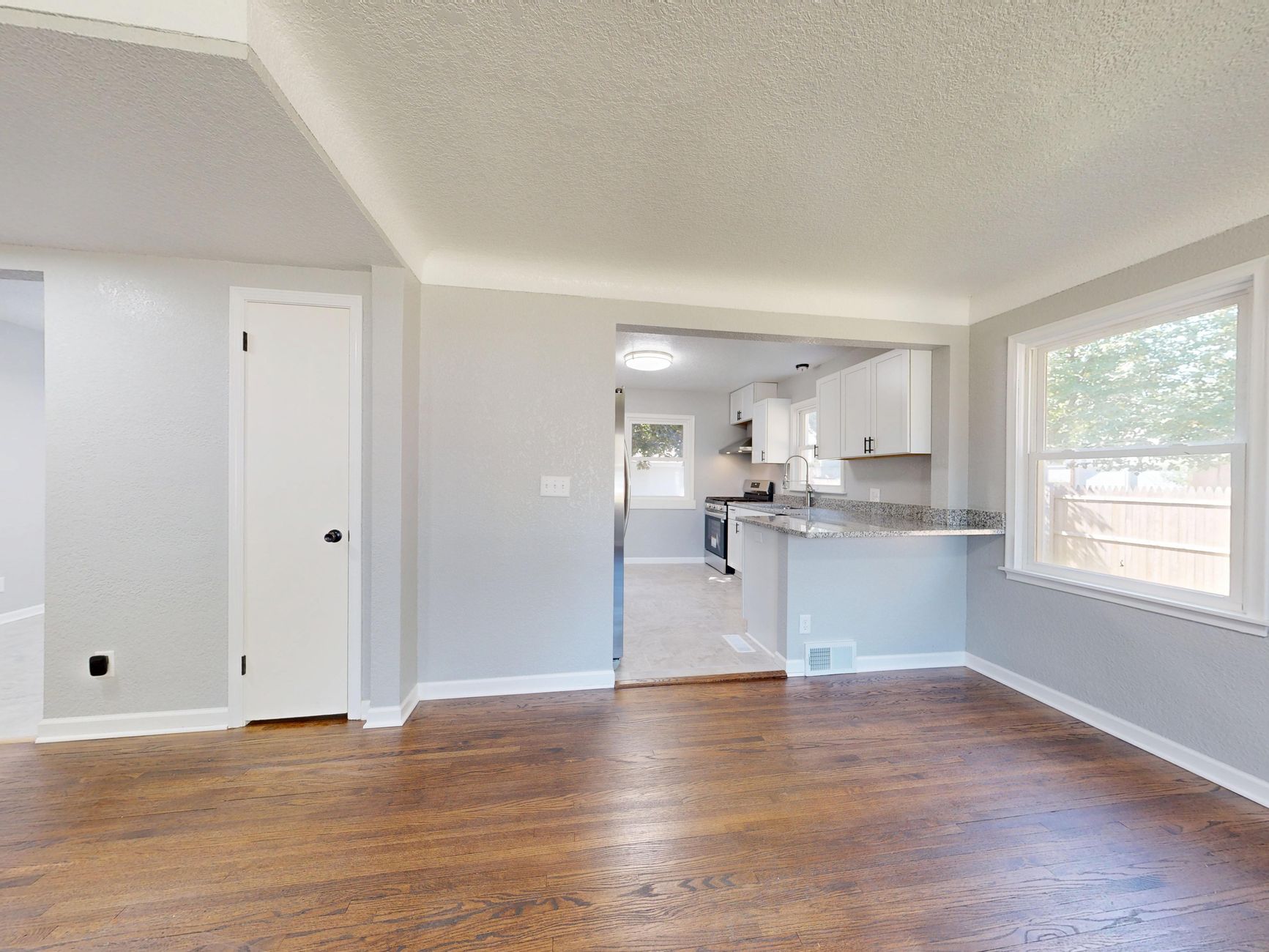
Hardwood Floor Refinishing in Salem, Oregon
What it costs, and what Salem's housing stock does to the job.
Floor refinishing in a 1980-median city
The median Salem home was built in 1980 and 8.8% of the city’s housing predates 1940. For floor refinishing specifically, that is not background color — it is the thing that decides the job.
The best refinishing prospects in Oregon are here. Original fir treads and floors are common in this housing, and refinishing costs roughly a third of replacing — but fir is not oak and the job is not the same job. Its soft early wood sands away faster than its hard late wood, so a drum handled the way it would be on oak leaves a washboard that only shows under a low-angle light after the finish is on. Ask how many fir floors the installer has done, and ask how much thickness is left above the tongue before agreeing to a full sand.
Salem runs 40.1 inches of rain over 148 wet days with a 1980 median and 8.8% prewar, so most of it is postwar wood-frame on plywood, wrapped around an older center. It is the most ordinary flooring market in Oregon, and that is useful information: nothing about the ground, the climate or the construction here forces a material on you. The choice is genuinely about how the room is used. The prewar streets — Grant, Highland, the older part of Candalaria — are the exception, and there the question turns into the Portland one: find out what is already down there first.
What it costs in Salem
the Willamette Valley labor runs below the Oregon baseline, which is why the range below sits under the statewide $3–$9. Installed, materials and labor together:
| Work | Salem range | Oregon range |
|---|---|---|
| Refinishing existing boards | $3 – $8.5 a square foot | $3 – $9 a square foot |
An estimate, not a quote. These are planning ranges for Oregon, not a quote. What you actually pay depends on your rooms, your subfloor and the material you choose.
Extras are where a Salem job most often moves away from the band: removing the old floor, prepping a plank subfloor, and stairs. The cost estimator prices those separately against your own room.
Questions worth asking before you book
- What is the subfloor, and what does it need? 8.8% of Salem homes predate 1940 and the median build year is 1980, so plywood or OSB is the likelier answer here and a plank subfloor is the exception worth ruling out. How to identify yours.
- Is the old floor coming out or being covered? Covering costs less and is sometimes the safer answer, but it costs you height at doors and at the bottom stair riser.
- What is the cut-and-waste allowance? Ten percent is normal; older or irregular rooms take more, and cuts are labor.
- What did the slab read, and what did the boards read? An installer who measured both has told you more than a classification code could. What Oregon licenses, and what it does not.