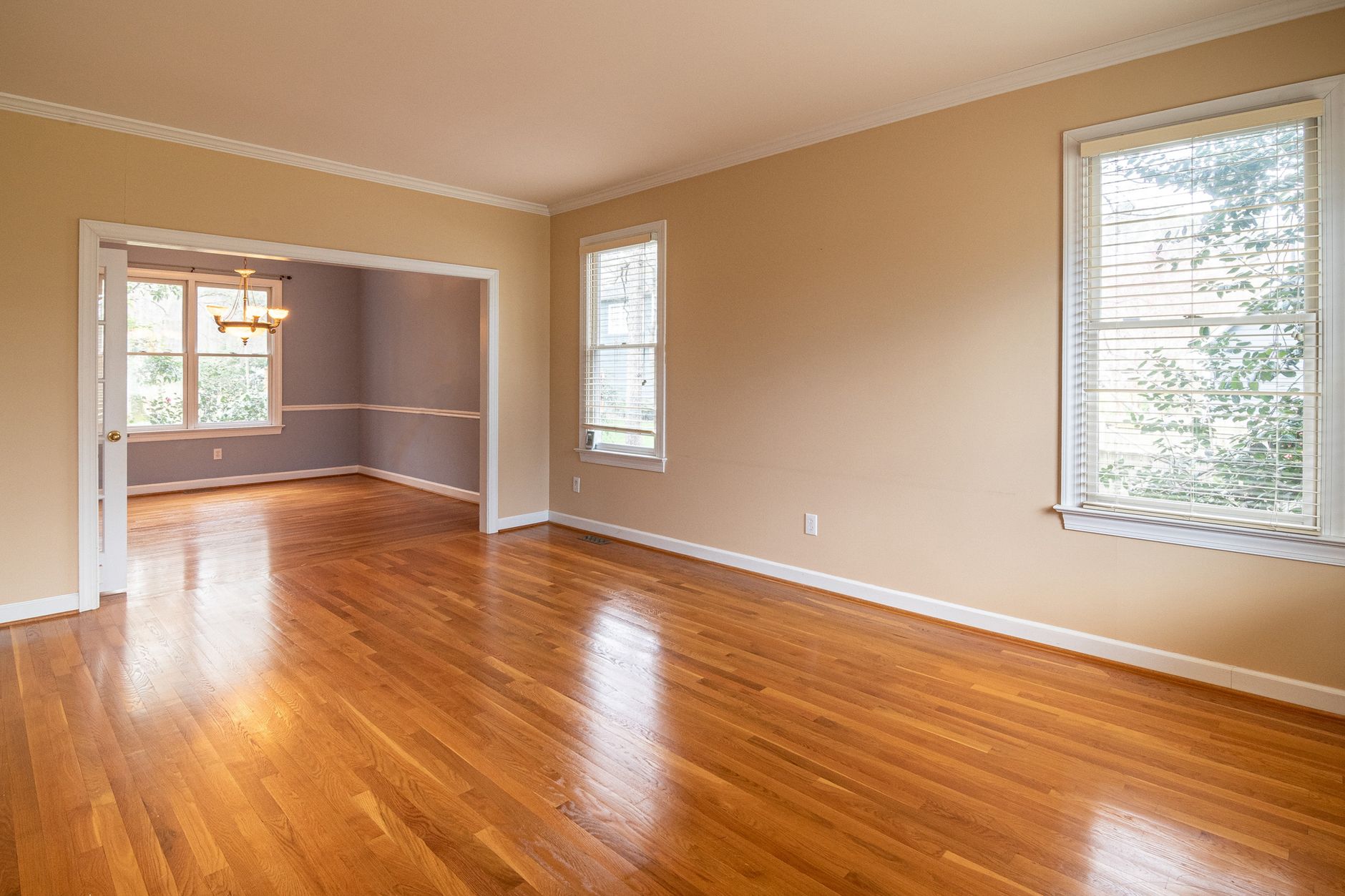
A floor in Bend and a floor in Portland are answering different questions, even though both are in Oregon. West of the Cascade crest, the air holds more moisture year-round, older houses are more likely to be hiding an original wood floor, and the first question is often “what’s already down here?” East of the crest, the air is drier, houses are newer on average, and wood needs to be acclimated to a tighter number before it goes in. Neither side is the “real” Oregon answer — the state contains both, and a job description that doesn’t say which side it’s on is missing the point.
Why does the Cascade crest split Oregon’s flooring answers?
The crest is a genuine climate boundary, not just a line on a map. West of it, marine air keeps humidity elevated most of the year. East of it, the rain shadow leaves the air noticeably drier, summer and winter both. Wood floors respond to ambient moisture by expanding and contracting, so a plank that’s correctly acclimated in Medford is not correctly acclimated in Eugene, and installing it as though the two towns were interchangeable is how gapping and cupping complaints start.
This matters for solid hardwood most, but it also shapes how a laminate or engineered floor is stored and staged before installation, and it’s part of why the same material can behave differently depending on where in the state it goes down.
What moisture content should a wood floor acclimate to on each side?
East of the crest, a wood floor is generally acclimated toward a moisture content near 6%. West of the crest, the workable range runs from about 6% to 9%, and a job there should be targeting the upper end of that band, not the lower one. Either way, acclimation is a number a reader can ask for and get in writing — not a fixed number of days spent waiting.
A contractor or supplier should be able to state the target moisture content for the specific wood and the specific room, and should be able to show a moisture meter reading before installation starts. If a quote doesn’t mention a number at all, that’s worth asking about directly — it’s one of the details that gets left off more often than it should. A rundown of what flooring quotes commonly leave out covers this alongside a few other gaps worth checking for.
On the wet side, is there already a floor under the carpet?
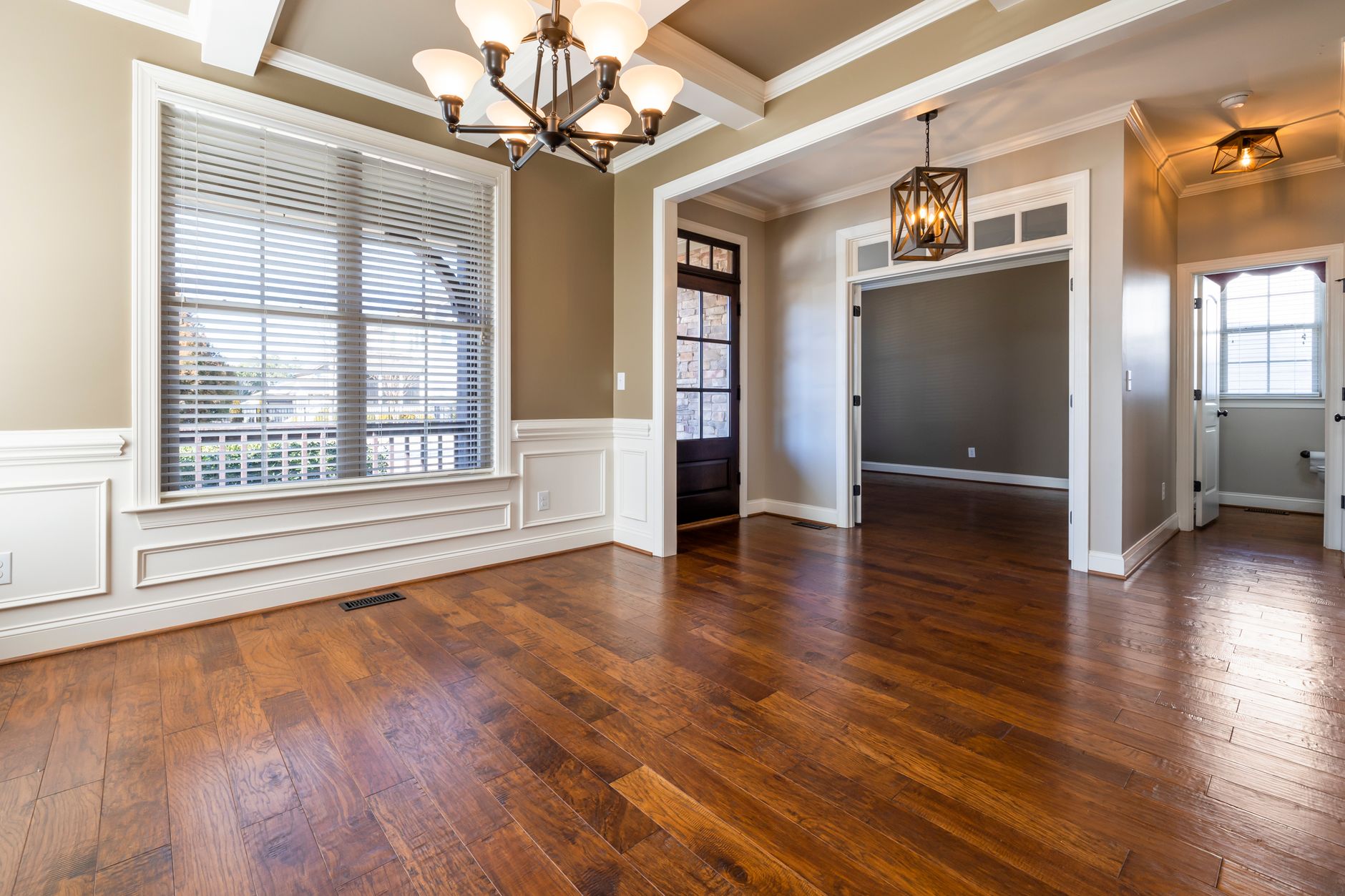
West of the crest, this question comes before “what should be bought new.” A lot of prewar housing in the Willamette Valley and Portland metro was built with Douglas fir strip flooring as standard subfloor-adjacent material, later covered over with carpet during a remodel decades ago. Pulling that carpet up sometimes reveals a floor worth refinishing rather than replacing.
Housing age is the clue here, not a guarantee. Portland has a median year-built of 1966, with 26.8% of its housing stock predating 1940 — a meaningfully large share of older homes where this is worth checking. Eugene’s median year-built is 1980, with 6.1% predating 1940. Corvallis sits at 1978 with 8.0% predating 1940, and Salem at 1980 with 8.8%. Springfield and Gresham are newer still, at 1976/4.6% and 1981/2.7% respectively. None of these numbers say what a house is worth — they only say how likely it is that an original wood floor is still down there.
Refinishing an existing wood floor runs about $3-$8 per square foot, versus $6-$21 per square foot to install new hardwood. That’s roughly a third of the cost when the original floor is sound, which is the reason it’s worth checking before ordering material. These are planning ranges only; the actual number for a given room depends on the floor’s condition, the species, and the finish chosen, and a firmer figure comes from the Oregon cost estimator once those details are known.
East of the crest, this same question matters less. Bend’s housing stock has a median year built of 2001, and 52.0% of it was built in 2000 or later — there’s far less prewar housing to check under, and most floors there were installed under current materials and current acclimation practice from the start.
Does labor cost follow the same line as climate?
No, and this is the detail that trips people up. The climate line and the labor-cost line are not the same line. Material for flooring is a national commodity — plywood, vinyl plank, tile, and hardwood cost about the same wherever they’re bought in Oregon. Labor is what moves, and it moves by roughly 15% between the most expensive market and the least, Portland metro at the top and Eastern Oregon at the bottom.
Central Oregon, which includes Bend, is the second most expensive labor market in the state — and also the driest. Dry does not mean cheap. A tile or stone job in Bend can cost more in labor than the identical job in the Willamette Valley, even though Bend’s climate is the one that’s easier on wood.
Medford, in Southern Oregon, has a median year built of 1984 and 8.8% of its housing predating 1940 — a dry-side city with an older housing profile than Bend’s, though still younger than most west-side cities. Southern Oregon sits in the middle of the labor-cost order, below the Willamette Valley and above Eastern Oregon.
Because labor is the moving piece, jobs that are mostly labor swing the most across the state. Tile, natural stone, and stairs fall into that category — tile installed runs $9-$14 per square foot, natural stone $15-$40 per square foot, and stairs $55-$130 per step, and in all three cases labor is most of what’s being paid for. A material-heavy job like carpet, at $2-$8 per square foot including a lot of manufactured product, swings less by region because material cost doesn’t change. Again, these are planning ranges, not quotes — the reader’s own square footage, material choice, and region change the final number. Installed cost ranges broken out by material and by city lay this out in more detail, and the ten city pages cover housing stock city by city.
Which materials handle each side well — and which don’t?
Solid hardwood is the material most affected by the crest, since it’s the one most sensitive to seasonal moisture swings on either side. It performs well in living rooms and bedrooms on both sides of the state, provided it’s acclimated to the correct target. It’s a poor choice for a full bathroom or a laundry room anywhere in Oregon — standing water and solid wood don’t mix, wet side or dry side.
Engineered wood and laminate tolerate humidity swings better than solid hardwood, which makes them a reasonable substitute in rooms where the look of wood is wanted but the moisture profile is less forgiving. Laminate installed runs $3-$10 per square foot; it’s not the right choice for a room with standing water risk, and it doesn’t refinish the way solid wood does once it’s worn.
Luxury vinyl plank, at $2-$12 per square foot installed, is largely indifferent to which side of the crest it’s on — it’s dimensionally stable across humidity ranges in a way solid wood is not, which is part of why it shows up so often in kitchens and bathrooms in this state regardless of region. It’s a poor fit for a formal living room where the read of real wood grain matters, and it doesn’t hold resale-neutral appeal the way refinished original fir does in an older west-side house.
Tile and natural stone are unaffected by the Cascade climate split in the way wood is, but their labor cost is the most exposed to the regional swing described above. Neither belongs in a room prone to standing hot water without proper waterproofing underneath — that’s a materials-and-installation question, not a climate one. A rundown of all eight materials, what each is good at, and where each fails covers this room by room. Room-by-room demands also matter on their own — a kitchen and a bedroom put very different stress on the same floor, and the room-by-room breakdown orders all six by how hard they are on a floor.
What about permits, asbestos testing, and older floors?
Pulling up an old floor, especially in a house built before the 1980s, can raise both questions at once. Older resilient flooring and some older adhesives have, in some cases, contained asbestos, and the general position from health authorities is that suspect material should be tested before it’s disturbed, not assumed one way or the other. That testing is a job for an accredited laboratory, not a guess based on the material’s age or appearance.
Permitting is a separate question, and it’s answered locally in Oregon, not statewide. Whether a given flooring job needs a permit depends on the municipality or county where the work happens, and that’s the office to call — not a statewide rule that applies the same everywhere. Anyone hiring out the work can also confirm a contractor’s registration status directly with the Oregon Construction Contractors Board rather than taking a license claim at face value.
Frequently asked questions
Does the Cascade crest split matter for vinyl or laminate, or just hardwood?
It matters most for solid hardwood, since that’s the material most sensitive to ambient moisture. Laminate and luxury vinyl plank tolerate humidity swings better and are less affected by which side of the state they’re installed on.
Is Bend cheaper to install flooring in because it’s dry?
No. Bend and the rest of Central Oregon are the driest part of the state and the second most expensive labor market at the same time. Dry climate and low labor cost are unrelated facts here.
How does someone find out if there’s a wood floor under their carpet?
Pulling back a corner of carpet in a low-traffic area, like a closet, is the usual first check. Houses built before the 1940s in west-side cities are the most likely candidates, though it’s not guaranteed by age alone.
Where does the acclimation moisture target come from for a specific job?
It should come from whoever is supplying or installing the wood, based on the wood species and the room’s location. A moisture meter reading before installation is the way to confirm the number, not a fixed number of days.
ORFloors is an independent Oregon flooring resource. We do not sell or install flooring, we do not quote jobs, and nobody from this site will call you. Cost figures here are published planning ranges for Oregon, not quotes — what you actually pay depends on your rooms, your subfloor and the material you choose, and the final price depends on your project. Photography is licensed stock used to illustrate materials and rooms; it is not work by anyone connected to this site. Building code and permit requirements are enforced locally in Oregon, so confirm anything regulatory with your own municipality before you rely on it.
Any prices mentioned are indicative only. Tool prices move constantly and vary by market, by retailer, and by whether a kit includes batteries or a charger — check the current price yourself before deciding.
Featured image: Photo by Curtis Adams via Pexels.