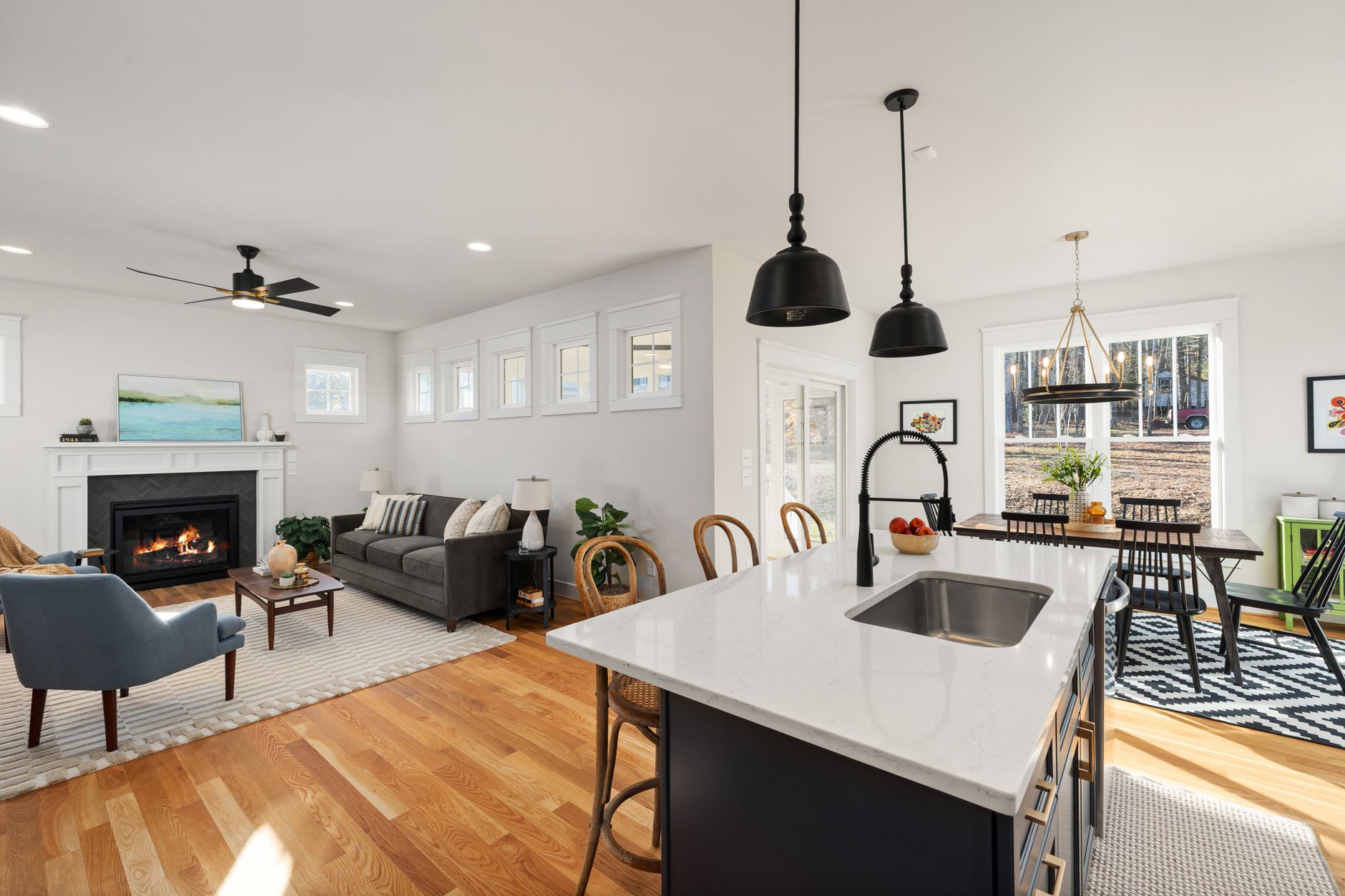
Living Room Flooring in Oregon: The Room Where Wood Wins
The living room is the biggest single area in most houses, which makes it the room where the material decision costs the most and where wood is most often the right answer.
Why this is the wood room
A living room takes traffic but not water, and it is the room people look at. That combination is exactly what wood is good at, and it is why hardwood is the default here rather than a splurge.
West of the Cascades, this is straightforward. A mild, damp climate holds indoor humidity inside the 30–50% range wood flooring is specified for without anyone doing anything, so solid hardwood is an ordinary choice and a wide plank is not a gamble. East of the crest it is a managed choice: engineered rather than solid, a narrower board, a moisture target near 6% and whole-house humidification through the winter.
An estimate, not a quote. These are planning ranges for Oregon, not a quote. What you actually pay depends on your rooms, your subfloor and the material you choose.
Before you buy: is there a floor here already?
In a west-side house built before about 1950, and Portland is 26.8% pre-1940, the living room is the most likely place in the house to still have its original vertical-grain Douglas fir under the carpet. Lift a corner in the least visible spot you can find. Refinishing costs roughly a third of replacing, and the wood in a hundred-year-old Oregon house is denser than anything with the same name on sale today.
It is the biggest floor, so the small decisions scale
- Board width. A wider plank reads calmer in a large room and moves more with humidity. West of the crest that is a look decision; east of it, it is a technical one.
- Direction. Running boards the long way makes a room read longer; running them across the joists is the structurally sound default on a board subfloor.
- Underlay, if it floats. A large floating floor over thin foam is the loudest thing in the house. This is where the underlay upgrade actually pays.
Open plan changes the question
Most Oregon houses built since the nineties run the living room, dining area and kitchen together, and the floor has to work in all three. That usually pushes the answer toward vinyl plank or engineered wood rather than solid, because it puts the kitchen’s water tolerance into the same material as the living room’s appearance. The alternative — a transition strip mid-room — rarely looks deliberate.
Common questions
Will a rug damage a wood floor?
Not the rug — the grit under it, and sunlight around it. A floor that spends ten years under a rug will be a different shade from the rest of the room when it comes up, which is worth knowing before you move furniture.
What about a fireplace hearth?
Wood runs up to the hearth with an expansion gap and a transition. Do not caulk it solid.
Is engineered wood a compromise?
Not east of the Cascades. A good engineered floor with a thick wear layer can be refinished and is dimensionally more stable than solid. The cheap ones with a paper-thin veneer cannot, which is the distinction worth asking about.